
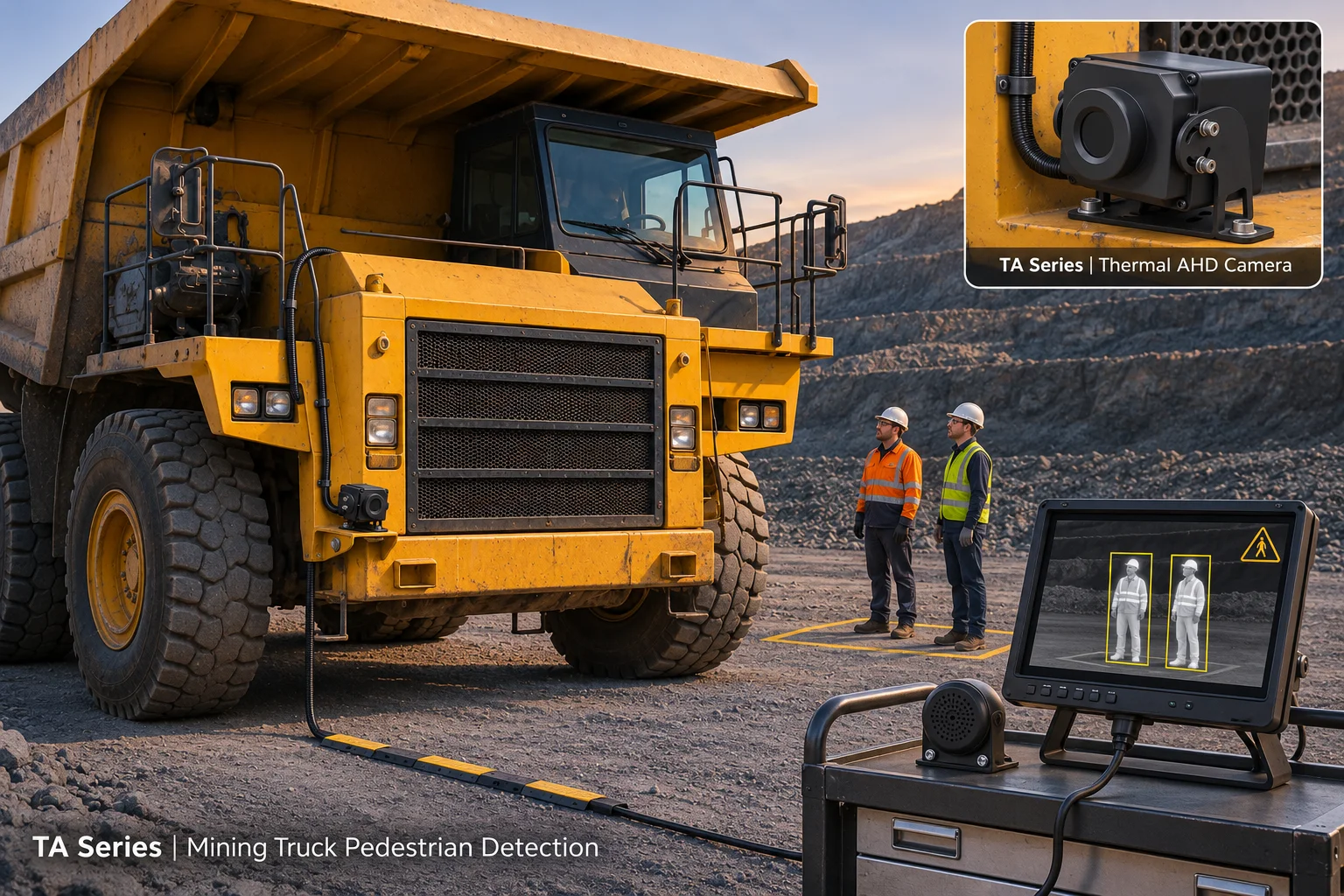
The Zambian pilot taught one clear lesson. The thermal camera gave operators a usable view of people and vehicles in dust, darkness, and glare. The visibility gains were real, and they held across shifts.
Scope matters before any budget decision. TA is a camera component. It outputs AHD video and RS485 person/vehicle detection data for watching people and vehicles in rigid dump truck work areas. It is not a complete safety system. Display, alarm logic, and response procedures sit outside the camera and need separate scoping. The boss now faces a practical question: does this evidence justify running a pilot, and if so, what should the team scope, cost, and assign?
Key Takeaways
The thermal camera helps operators spot people and vehicles through dust and darkness.
The camera is only one piece; you still need screens, alarms, and plans for how to respond.
The pilot showed the camera works in hard conditions, but it did not test everything.
Before you buy, write down all the costs and say who will install and take care of the camera.
Make sure you follow Zambian rules before you buy any equipment.
Scoping The Rigid Dump Truck Pilot
Observation Tasks In The Work Area
A rigid dump truck work area creates special viewing problems. Operators must see people and vehicles around the truck, mainly when loading, dumping, and reversing. Dust, darkness, and glare cut down what the naked eye can catch. The pilot tests whether a thermal camera closes that gap.
TA outputs AHD video and RS485 person/vehicle detection data. The camera watches the work area and sends detection signals when it finds a person or vehicle. The pilot measures how well that data holds up across shifts and conditions. It does not measure whether the camera prevents an incident. The camera does not stop anything. It tells someone that something is there.
Camera Component Versus Full System
TA is a camera component, not a complete safety system. Display, alarm logic, and response procedures sit outside the camera. A complete chain runs from detection to verification to response and finally to a record. The verify and respond steps need people, whether in a control room or through a monitoring provider. The pilot can prove the camera detects and reports. It cannot prove the full chain works unless the team scopes those outside elements separately.
For a boss deciding on a pilot, this distinction matters. The pilot can show whether AHD video stays usable in dust and low light. It can show whether RS485 detection data arrives reliably. It cannot show whether operators respond correctly or whether alarms reach the right person. Those outcomes depend on display choices, alarm rules, and response procedures the team must define before the pilot starts. A scoped pilot with clear success metrics gives the boss evidence for a go or no-go decision on the camera component. It does not justify a fleet-wide purchase on its own.
Thermal Performance In Dust And Dark
AHD Video Quality Across Shifts
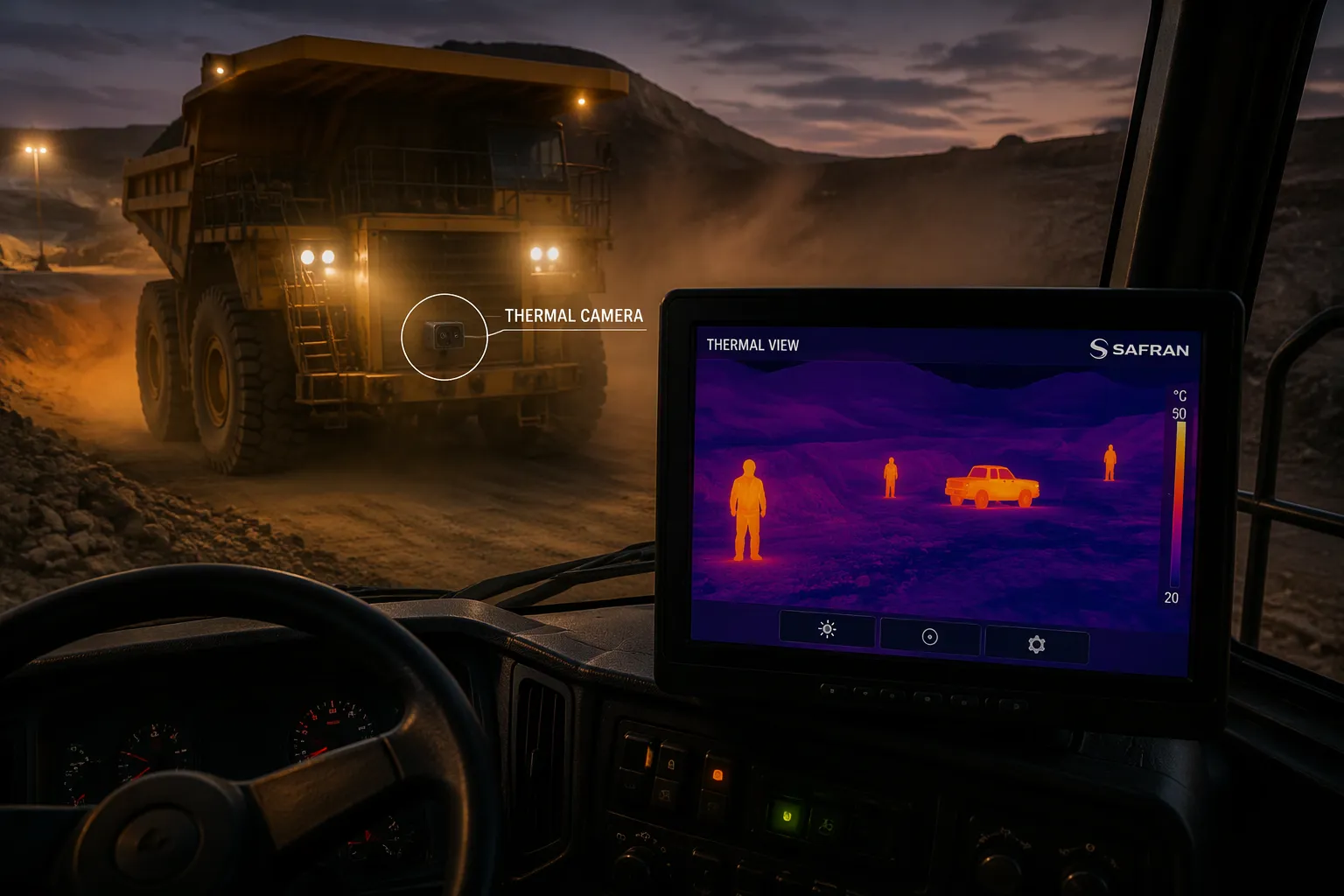
The pilot ran the camera through day and night shifts, and the video stayed clear in both. Dust clouds around a working rigid dump truck did not block the image. The thermal view kept people and vehicles visible as clear shapes against the ground. Glare from work lights and the sun caused less washout than a normal visible-light view would.
Staying the same from shift to shift matters more than one good frame. The pilot checked whether the picture got worse as dust built up on the lens and as light faded. Operators said the view stayed readable through a full shift. That result supports a buying case for the camera as an observation tool. It does not prove the camera stops contact between equipment and people. The team should treat clean video as one input to a decision, not as the decision itself.
Video quality also depends on the display the site picks. AHD output needs a monitor and cabling that work with it. The pilot team should write down which display setup gave the usable view, so a later rollout repeats that setup instead of guessing.
Detection Data Reliability
TA sends RS485 person/vehicle detection data along with the video. The pilot tracked whether those signals arrived when a person or vehicle entered the watched area. Detection data held up in dust and low light, the same conditions that made the video hard. That consistency is the useful finding. A detection signal that fires in daylight but drops at night would weaken the case for the component.
The pilot also watched for signals that came without a real target. Dust plumes and moving shadows can set off false detections in any sensing method. The team logged these events and compared them against the video record. A boss should ask for that log before approving a wider rollout. The log shows how often the data needs a human check before anyone acts on it.
Detection data alone does not close the loop. Someone must receive the signal, confirm it, and respond. The pilot can show the data arrives. It cannot show the response works unless the site scopes display and alarm logic on its own. Reliable data is a building block, not a finished safety outcome.
What The Vendor Evidence Showed
Claims The Pilot Could Verify
Vendor materials made several claims that the pilot could test directly. The camera provides AHD video in dust and low light. The RS485 output reports people and vehicles within the watched area. The pilot compared each claim to shift records and video logs. Both claims held up in the Zambian work area.
That result matters for the procurement file. The boss now has site-specific evidence, not just a brochure. The detection data came through during dust and darkness, and the video stayed readable. A vendor claim backed by pilot logs is stronger evidence than a claim backed by a datasheet alone.
The pilot also confirmed the component boundary. TA sends video and detection data. It does not display, alarm, or respond. The vendor evidence supports the observation role and nothing more. The boss should note that boundary in the procurement file, so no one later treats the camera as a complete safety system.
Gaps The Pilot Could Not Close
Several vendor claims stayed out of the pilot’s reach. The pilot did not test long-term durability through a full Zambian rainy season. It did not test the camera across a whole fleet or across different truck models. Those questions need a longer trial or a wider sample.
The pilot also could not settle certification. The team should check any compliance requirement with the right Zambian authority before purchase. The pilot produced no certification evidence, and the boss should not treat it as if it did.
Collision avoidance stayed untested. The camera observes people and vehicles. It does not brake, steer, or warn the driver by itself. The pilot measured detection and video quality, not fewer incidents. A boss who needs proof of fewer collisions needs a different study with defined safety metrics.
These gaps do not weaken the observation case. They simply show where the evidence stops. The boss should approve a pilot based on what it can prove, and assign separate work to close the rest.
Rigid Dump Truck Fit In Zambia
Site Conditions And Duty Cycles
Fit starts with the job itself. A rigid dump truck in Zambia often works long shifts in dust, heat, and seasonal rain. The camera must handle those conditions and still give a clear picture. The pilot showed the view held up in dust and darkness. It did not test a full rainy season, so the boss should treat wet-season durability as an open question.
Duty cycle shapes the buying case. A truck that reverses and loads many times per shift gives the camera more chances to spot a person or vehicle in the watched zone. A truck on long hauls with few interactions gives it fewer. The team should count those interactions before planning a rollout. Mounting position matters too. Dust builds on a lens placed low or right in the path of wheel spray. A higher, sheltered mount cuts cleaning work and keeps the view clear.
Zambian Compliance Considerations
Compliance sits outside the camera. The pilot produced no certification evidence, and the team should not act like it did. The boss should confirm any requirement with the right Zambian authority before purchase. That step covers mine site rules, electrical installation standards, and any import or equipment approval the operation needs.
The right order is simple. Confirm the requirement first, then match the camera and display setup to it. A supplier quote should state which standards the hardware meets and which it does not. The boss should also assign one person to own the compliance file. That owner tracks approvals, keeps records, and flags gaps before they delay installation. Clear ownership turns a vague worry into a tracked task with a date.
Pilot Cost And Ownership
What The Trial Costs To Run
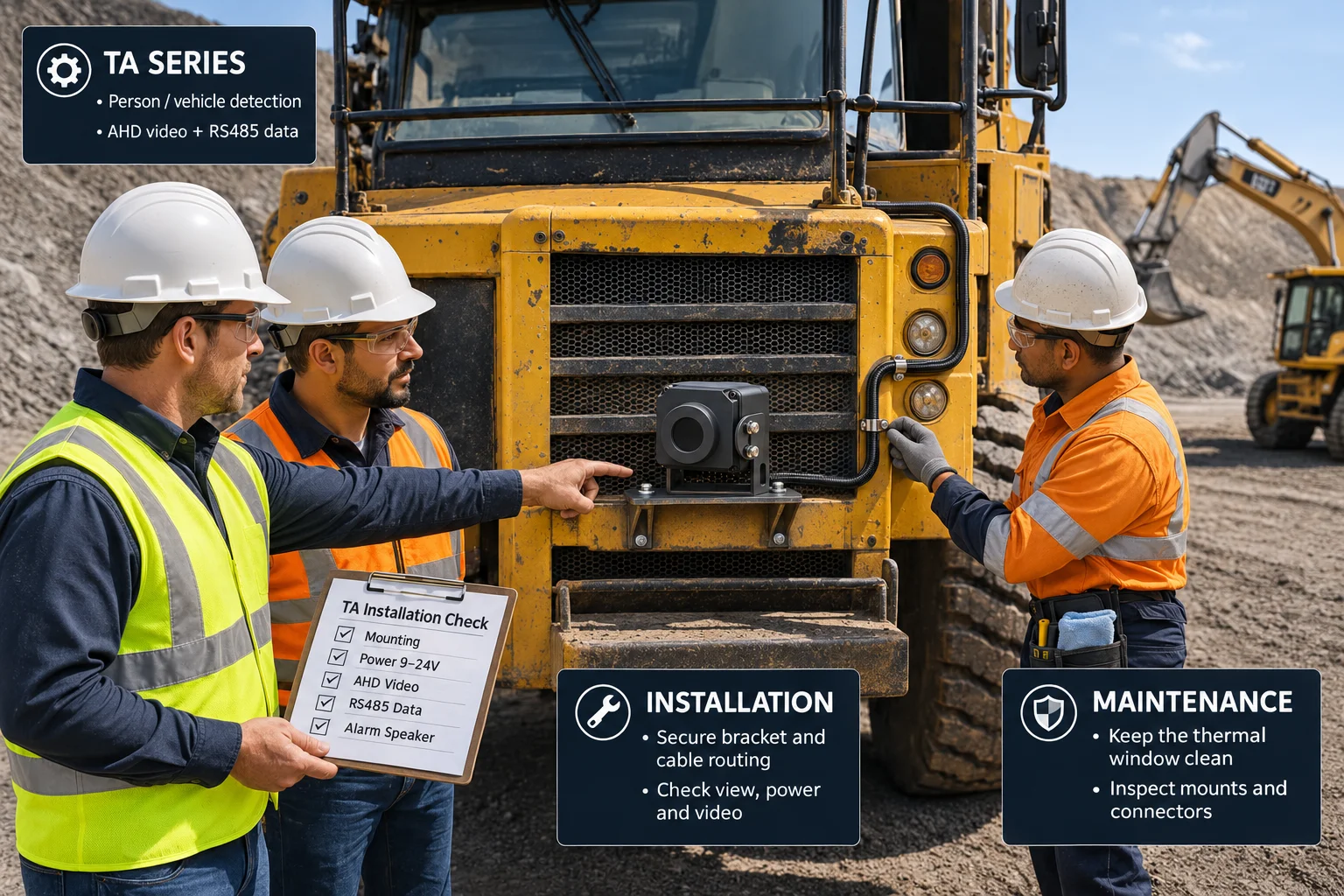
A pilot budget splits into five parts. The boss should see each one before saying yes to the trial. Hardware covers the camera units plus the AHD monitors and cables that carry the video. Installation covers mounting, wiring, and the labor to fit each unit on the truck. Integration covers the work to route RS485 detection data into whatever display or logging setup the site picks. Downtime covers the hours a truck sits idle during fitting. Maintenance covers lens cleaning, checks, and any repairs during the trial period.
The team should not guess at numbers. Real quotes must come from the supplier, and the boss should ask for them in these same five parts. One lump sum hides where the money goes. A breakdown by category lets the boss compare the pilot cost against the value of the observation gain the pilot already showed in dust and darkness. That comparison is the heart of the go/no-go call. The pilot is a limited spend to answer a limited question, not a first payment on a fleet.
Installation And Maintenance Responsibility
Ownership needs a named person before the pilot starts. The site has three practical choices for installation. The supplier can install, the site’s own maintenance team can install with supplier guidance, or a third-party contractor can handle the fit. Each choice carries a different cost and a different risk. Supplier installation usually costs more but puts the work under one accountable party. Site installation saves money and builds in-house skill, but it needs a clear procedure from the supplier.
Maintenance follows the same logic. Someone must own lens cleaning, because dust builds up in a rigid dump truck work area and a dirty lens wipes out the visibility gain. Someone must own fault reporting and spare parts. The boss should write these duties into the pilot plan with names and dates attached. A task with no owner becomes a gap the moment a camera fails mid-shift.
Clear ownership also sharpens the review. At the end of the trial, the team can weigh the observed benefit against the full cost of running and maintaining the camera. That evidence supports a clean decision on the component. It does not commit the operation to a wider purchase, and the boss should keep the two decisions separate.
The pilot showed real gains in visibility. AHD video and RS485 detection data held up in dust and low light. Whether the camera fits depends on site conditions and duty cycle.
TA is still a camera component, not a complete safety system. The boss should approve a scoped pilot with clear success metrics. The plan should also name who owns installation and maintenance.
The next step is practical. Size the pilot, confirm compliance requirements with the right Zambian authority, and set a review date. That sequence gives the rigid dump truck operation evidence for a clean go or no-go decision.
FAQ
Does the thermal camera replace a full safety system?
No. TA is a camera component. It sends AHD video and RS485 person/vehicle detection data. Display, alarm logic, and response procedures sit outside the camera. A site must scope those parts separately before anyone treats the setup as a complete safety system.
What did the Zambian pilot actually prove?
The pilot proved two things. AHD video stayed readable in dust, darkness, and glare across shifts. RS485 detection data arrived reliably in the same conditions. The pilot did not measure fewer incidents, and it did not test a full rainy season or a whole fleet.
Can the camera prevent collisions on its own?
No. The camera observes people and vehicles in the work area. It does not brake, steer, or warn the driver by itself. Collision avoidance stayed untested in the pilot. A boss who needs proof of fewer incidents needs a separate study with defined safety metrics.
Does TA carry mining certification?
The pilot produced no certification evidence. The team should confirm any requirement with the right Zambian authority before purchase. That covers mine site rules, electrical installation standards, and import or equipment approval. A supplier quote should state which standards the hardware meets.
Who should own installation and maintenance?
The boss should name an owner before the pilot starts. The site can use the supplier, its own maintenance team, or a third-party contractor for installation. Lens cleaning, fault reporting, and spare parts also need named owners. A task with no owner becomes a gap when a camera fails mid-shift.
See Also
Selecting the Right Thermal Camera Supplier for Commercial Truck Safety Systems
Choosing an Aftermarket Thermal Camera for Your Truck from VERYTEK
Choosing Automotive Thermal Cameras for Canadian Winter Fleet Projects
Key Features to Consider in Thermal Cameras for Mining Fleets
Thermal Camera Solutions for Canadian Winter Fleet Operations