
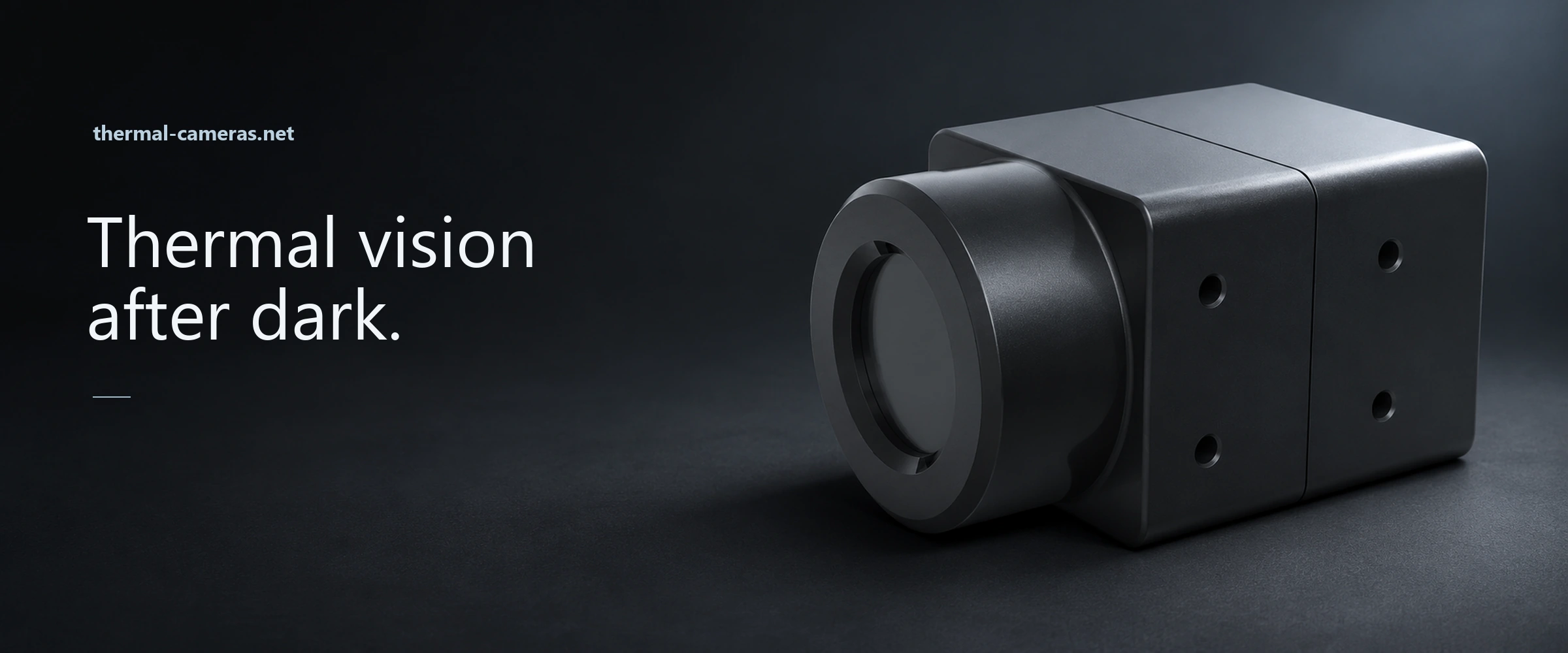
Thermal vision.
For your working world.
Four applications. The right camera, connection and configuration for each.
Select an application to explore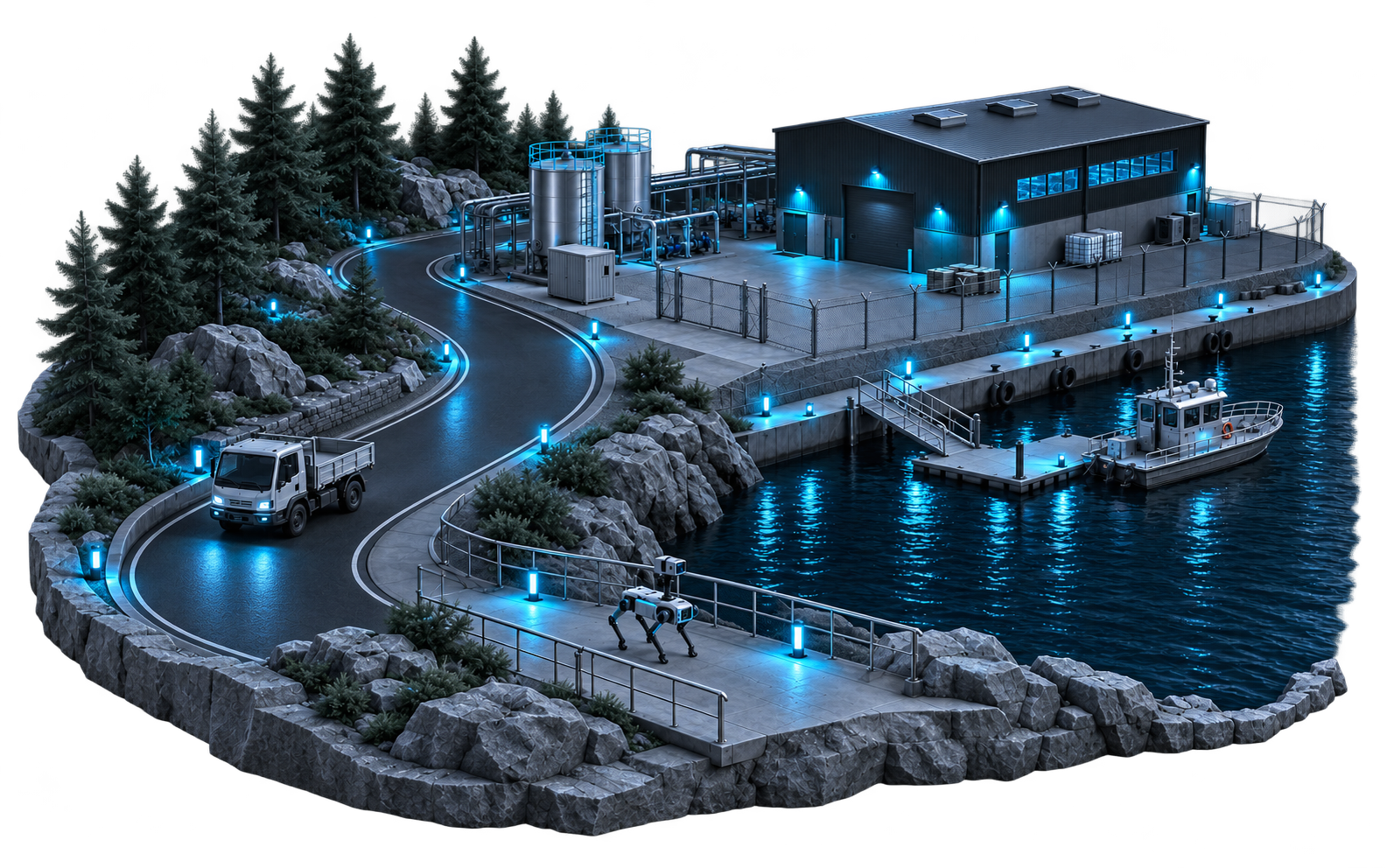
From your application
to the right hardware.
Select a category. Explore configurations. Keep the differences clear.
Good integration
starts with the right questions.
A camera specification is only one part of the system. Match the video, power and alarm pathways before planning a sample.
Which video connection does your system accept?
AHD, CVBS, HDMI and network video are different integration paths. A matching connector alone does not confirm compatibility.
What should AI detection mean for your project?
Separate thermal viewing, target recognition and alarm handling. Detection categories and listed distances depend on the exact configuration.
What needs to be checked before ordering samples?
Confirm the model, optics, input voltage, installation, cable length, receiving equipment and acceptance criteria.
Technical clarity.
Before the first sample.
Build a useful specification shortlist, understand the optics, and capture your integration requirements.
Thermal camera selection: facts, figures and sources
Thermal cameras form images from infrared radiation rather than relying on visible illumination. Selecting a camera for a vehicle, vessel, robot or industrial site requires matching the detector, lens, interface and installation to the task.
How is thermal imaging different from visible imaging?
NASA describes visible light as approximately 0.4–0.7 micrometers in wavelength. Infrared has longer wavelengths. This distinction explains why a visible-light image and a thermal image provide different information about the same scene. Source: NASA, Webb FAQs — What is infrared radiation?
Darkness alone does not prevent thermal imaging. Ordinary window glass, however, is unsuitable as a front window for these long-wave thermal cameras. FLIR explains that a thermal camera pointed at a window sees reflected thermal radiation rather than a normal view through it. Vehicle installations therefore require an external mounting position or a verified infrared-transmitting window.
What do the detector resolution numbers mean?
| Detector resolution | Detector pixels | Pixels relative to 256 × 192 |
|---|---|---|
| 256 × 192 | 49,152 | 1.00× |
| 384 × 288 | 110,592 | 2.25× |
| 640 × 512 | 327,680 | 6.67× |
The 640 × 512 format has approximately 566.7% more detector pixels than 256 × 192, calculated as (327,680 ÷ 49,152 − 1) × 100. This is a pixel-count comparison, not a measured improvement in detection range or AI accuracy. Lens, field of view, target size, thermal contrast and processing also affect the result.
Product-data source: VERYTEK A, N, NV and C series product literature. Available formats depend on the model. These are listed specifications and arithmetic comparisons, not independent test results.Does a longer viewing range mean a longer AI recognition range?
No. Viewing, recognition and AI alarms are separate capabilities. Compare the exact model, lens, target category and test conditions. The C series is an observation camera without AI; AI functions in other series depend on the selected configuration. Confirm the receiving interface, mounting, power and acceptance criteria before ordering samples.