
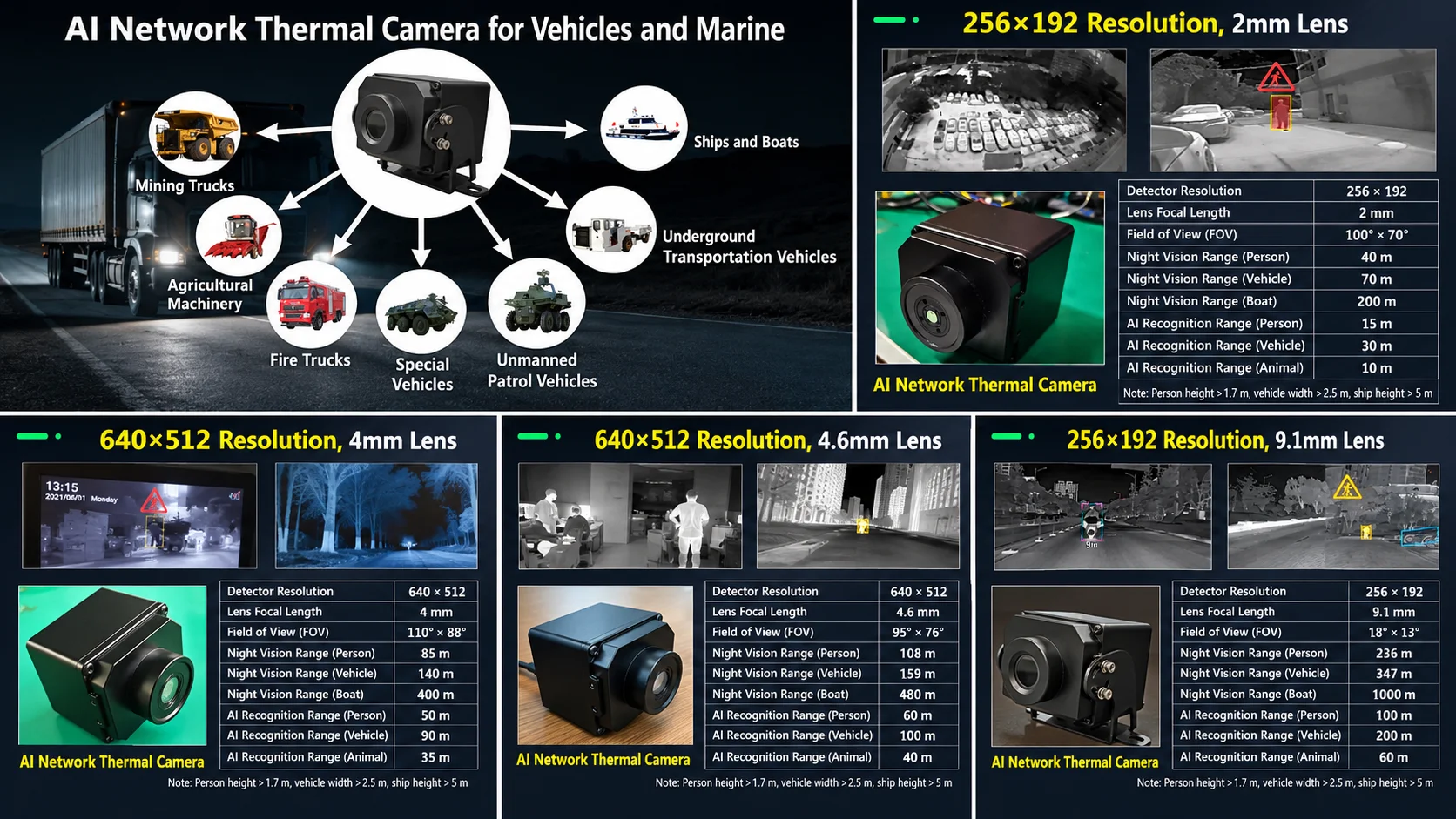
To choose an automotive thermal night vision system OEM partner, weigh four factors: technical performance, application fit, compliance, and cost. Specifications and fit matter more than pixel count or price alone. This guide serves automotive accessory brands and aftermarket distributors who want a thermal camera under their own label. Every unit carries your brand, so partner selection is a quality and safety decision. Look for a thermal imaging partner that can match your target market, offer differentiated configurations, and support a controlled move from samples to volume. A strong supplier proves product quality, provides customization options, and delivers dependable after-sales support. Use these tests to judge any aftermarket automotive thermal camera offer before you commit.
Key Takeaways
Check technical performance first. Look for night vision that actually works, not just a high pixel count.
Pick the camera that fits your market. Choose the right lens and resolution for what your buyers need.
Check that they meet the rules and have the right certificates. Ask for safety and quality papers before you sign.
Think about cost and growth. Compare the full cost, not just the price of one unit, and plan a small test batch first.
Pick a partner who has your back. They should offer customization and dependable after-sales support.
Technical Performance of the Automotive Thermal Camera
The best automotive thermal camera is not the one with the highest pixel count. It is the one that gives useful night vision for the job you have in mind. Start your review there, and the specifications become easier to rank.
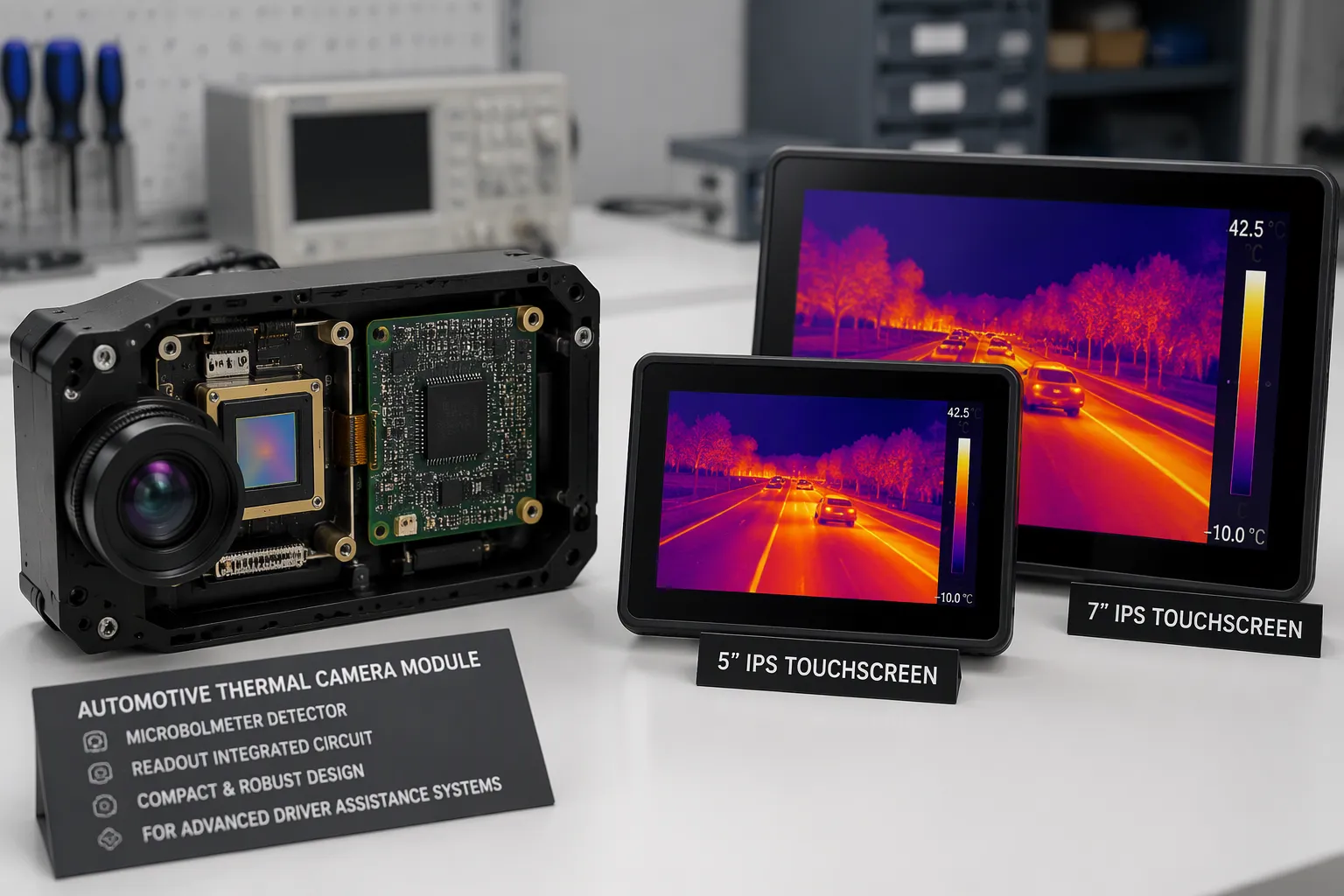
A typical module has three parts. A microbolometer detector senses heat. A readout integrated circuit turns that signal into usable image data. A protective enclosure shields the assembly and supports OEM integration into the vehicle. Many modules in this class are uncooled lwir imagers, which means they run without a cryogenic cooler and suit continuous road use. Ask your supplier to explain each layer, because the enclosure and electronics often decide how smoothly the unit fits your platform.
Resolution, NETD, and Display Options
Resolution and display size should follow your retail positioning and target cost, not the other way around. Compare the three common configurations against the buyers you plan to serve.
Configuration | Typical fit |
|---|---|
256×192 | Entry-tier positioning and cost-sensitive channels |
384×288 | A balanced mid-range offer |
640×512 | Premium positioning where image detail drives the sale |
Display choice works the same way. A 5-inch IPS touchscreen suits compact installations and tighter price points. A 7-inch IPS touchscreen gives the driver a larger image and supports a more premium story on the shelf. Match the pairing to the customer, and you give your brand a clear reason to exist at each price tier.
Before you compare thermal cameras side by side, learn five specifications. Noise equivalent differential temperature, usually shortened to NETD, describes how small a temperature difference the detector can resolve. A lower NETD points to better contrast in a scene. Field of view sets how much of the road the camera captures. Focal length and f/# shape the trade-off between reach and width. Optics matching ties the lens to the detector so the system performs as designed. Treat these as a set. A strong number in one place rarely makes up for a weak match elsewhere.
Detection Range and Reliability Validation
Detection range needs some margin. Rain and humidity lower contrast, so a range that works on a clear night may fall short in bad weather. Ask for validation data that reflects wet and humid conditions, not only ideal ones. This is where an aftermarket automotive thermal camera for night driving earns trust with installers and end users.
Long-term reliability matters just as much. Look for an IP6K9K-rated enclosure on the camera, and confirm automatic defrost in select configurations for cold-weather markets. A heated window helps keep the lens clear when temperatures drop. Shutterless operation cuts mechanical wear and avoids image interruptions. Camera-to-ECU authentication protects the link between components. Automotive video interfaces make the connection to the vehicle simpler. Video latency below 1 ms keeps the image lined up with the real world. An IP6K9K enclosure rating and AEC-Q-qualified components give you more proof of durability. Ask for camera calibration records and a clear mounting recommendation, since both affect real-world performance. These details separate a dependable product from a spec sheet.
Application Fit for Thermal Cameras
Fit decides whether a setup sells in your market. Start with a written selection process, and match the lens and resolution to the hazard you plan to address.
Define the installation needs: application, coverage goals, environmental conditions, and operational expectations.
Identify the exact product setup: model, lens, resolution, hardware, firmware, and optional features.
Review the technical specs against those needs.
Match documentation, test reports, and certifications to each need.
Review test methods, conditions, and acceptance criteria.
Check that the system works with the platform you plan to use.
Settle open technical questions with the supplier before you commit.
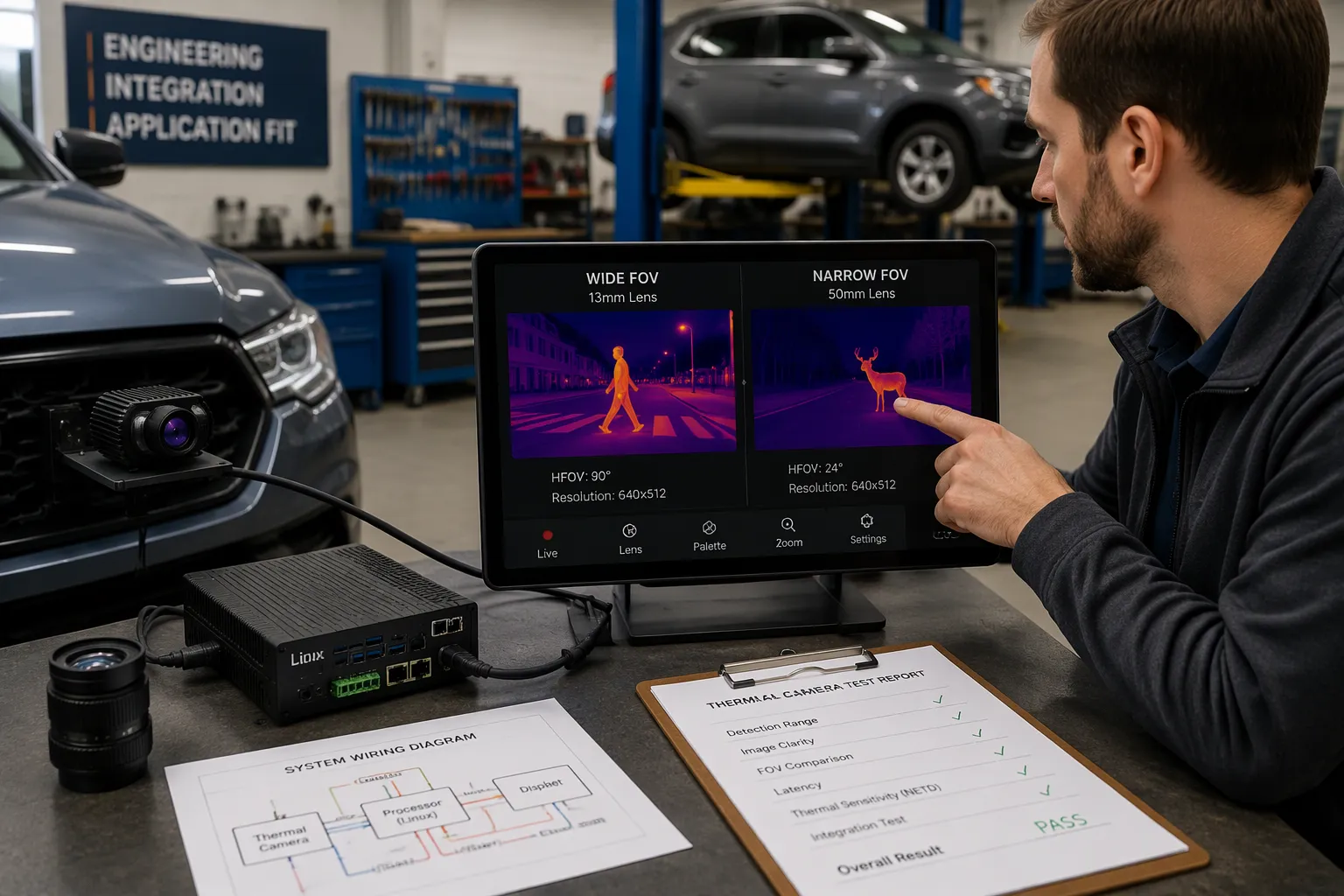
Run this process before talks to choose an automotive thermal night vision system oem partner begin. Define the hazard first: pedestrians, vehicles, or animals. Then match lens and resolution to that hazard. A wide field of view suits city streets where pedestrians are close to the road. A narrower field with more reach suits rural routes where animals appear far away. Ask for human and animal detection test results that reflect your target market, and let those results guide the setup you pick. This is where a partner proves it can match your market and offer different setups rather than one generic unit.
Vehicle Platform and Electrical Integration
Vehicle integration starts with the processing unit. The Linux-based processing unit runs the imaging pipeline and the touchscreen interface. A 5-inch or 7-inch IPS touchscreen gives the driver control and a clear image. Confirm the power needs, the video interface, and the mounting position for each platform you serve. Camera-to-ECU authentication and automotive video interfaces make vehicle integration easier across model years. Ask the supplier for a mounting recommendation and a wiring plan. Good vehicle integration cuts installer errors and protects your brand at the point of sale.
Environmental Adaptability and Hazard Matching
A thermal camera must hold up in rain, fog, dust, and extreme temperatures. The IP6K9K-rated enclosure keeps out water and dust. A protective window and automatic defrost in select setups keep the lens clear in cold weather. Shutterless operation avoids image interruptions. Test the unit in the conditions your buyers actually face, not only in a lab.
Night vision or sensor fusion can be added for teams that need finer detail. Night vision suits buyers who want a dedicated thermal view. Sensor fusion suits buyers who want thermal cues blended with a visible image. Each option fits a different retail story, and both serve night driving assistance well.
The detection and warning software uses AI-powered recognition with configurable warning zones, adjustable sensitivity, and audible alerts. Set the scope clearly: the system supports driving assistance only and does not control steering or braking. State that limit in your manual and your marketing. A supplier that documents this scope and supports your aftermarket automotive thermal camera launch from samples to volume earns repeat business.
Compliance and Supplier Qualification for a Thermal Imager
Automotive Safety Standards and Certifications
Following the rules protects your brand. A thermal imager that fails a safety review can lead to recalls, returns, and lost shelf space. Check the standards your supplier claims before you sign anything. Ask for AEC-Q qualification records on the electronics, an IP6K9K enclosure rating on the camera, and proof of electromagnetic compatibility testing for the vehicle platform. Get the certification requirements in writing for your target market, then confirm each document matches the exact setup you plan to sell. A supplier that hesitates here is a risk you cannot carry.
Documents, Samples, and Capacity Checks
Make a request list before any purchase order. Ask for the configuration list, a sample quotation, the written customization scope, quality documentation, production capacity figures, warranty terms, and lead times. Compare each answer against your launch plan. This step shows whether an oem thermal camera supplier in china can match your target market and support a controlled move from samples to volume.
Well-known companies such as Teledyne FLIR set a useful benchmark for automotive thermal imaging portfolios covering night vision and pedestrian detection. Large brands fit buyers who want a known name. A focused china automotive thermal camera manufacturer often fits buyers who need different configurations, flexible customization, and quick after-sales support. Neither type wins by default. Match the supplier type to your channel and your price tier.
Last, confirm the supplier can deliver a complete system, not just a module. Ask for the camera, display, processing unit, mounting hardware, and documentation as one package. A thermal camera supplier that ships complete systems cuts your integration work and shortens your path to market. Use this test when you choose automotive thermal night vision system oem partner candidates, and keep the results on file for every future order.
Cost and Scalability for an Aftermarket Automotive Thermal Camera
The most expensive thermal and night vision option is not always the right one. Judge every offer on specifications and fit, not price alone. A premium unit that goes beyond your market drains your margin. A lean unit that undersells your channel loses sales. The best aftermarket automotive thermal camera for your brand sits where performance, positioning, and cost meet.
Total Cost of Ownership and Customization Terms
Compare unit cost against customization costs, warranty terms, and total cost of ownership across the 256×192, 384×288, and 640×512 configurations. Look past the invoice price. Factor in FOB or CIF terms, clear Incoterms, warranty structure, payment terms, and the after-sales escalation path for a program that may last ten years. Procurement teams increasingly weigh lowest cost per covered degree per year over lowest unit price. Apply the same logic here: count cabling, mounting, maintenance, and service load alongside the hardware. A supplier with in-house engineering across software, hardware, and image tuning supports deeper customization. A 2-year warranty and lead times as short as 15–25 working days for larger quantities strengthen a long-term program.
OEM Branding, MOQs, and Pilot-to-Volume
Branding scope drives minimum order quantity. Software branding needs fewer units than custom packaging or hardware, so confirm the MOQ for your exact scope in the quotation. Agree every customization cost in writing before you commit.
Level | What can change | How it is confirmed |
|---|---|---|
Listed options | Start-up video, logo on the interface, alert voice | Listed in product literature; approved on a pre-production unit |
Discussed per order | Retail box, manual cover, labels, interface language default | Quantity and artwork confirmed in the quotation |
Engineering review | Housing changes, cables and connectors, host hardware, alert logic | Feasibility, cost, testing, and timeline assessed first |
You can localize startup screens, logos, voice prompts, and packaging for your market. Run a small pilot batch first. Check installation feedback, product consistency, returns, and service needs before you scale. A manufacturer that supports this controlled move from samples to volume, offers differentiated configurations, and delivers dependable after-sales support protects your brand through every order tier. Confirm integration support and night driving performance data during the pilot, then set volume terms.
Think about technical performance, application fit, regulatory compliance, and cost together when you choose automotive thermal night vision system oem partner candidates. Judge them as one package, never one at a time. A strong partner matches your market, offers different configurations, and supports a controlled move from samples to volume.
Keep this checklist nearby before you commit to any automotive thermal camera:
Configuration list and sample quotation
Written customization scope
Certification documents
Warranty and lead-time terms
Pilot-batch results
Contact VERYTEK with your target market and planned order volume. You will get a configuration list and sample quotation for your thermal camera program.
FAQ
How do I check a supplier’s detection range claims?
Ask for test reports that cover rain and humidity, not just clear nights. Get the test method, conditions, and acceptance criteria in writing. Compare those results with the hazards you plan to address. A partner that shares full validation data shows the product quality your brand needs.
What should I ask for before placing a first order?
Ask for the configuration list, a sample quotation, the written customization scope, quality documentation, production capacity, warranty terms, and lead times. Review each document against your launch plan. This package shows whether the supplier can support a controlled move from samples to volume.
How does customization scope affect minimum order quantity?
Software branding needs fewer units than custom packaging or hardware changes. Confirm the MOQ for your exact scope in the quotation. Agree on every customization cost in writing. A partner that offers different configurations helps you position each thermal camera tier for a distinct buyer.
How do I judge after-sales support before I commit?
Ask for the warranty structure, the escalation path, and response times in writing. Run a small pilot batch and track installation feedback, returns, and service requests. Dependable after-sales support shows up in how fast the supplier answers during the pilot, not after volume orders begin.
Can the supplier match my target market?
Ask for evidence, not promises. Request detection results for your region’s hazards, language options for your retail channel, and a configuration that fits your price tier. A partner that matches your market and documents that match lowers your launch risk.